Research
Agentic AI · 2024 – Present
AWS DevOps Agent Release Management
I am the tech lead for autonomous release testing in AWS DevOps Agent's release management capabilities. The agent generates and runs change-specific tests for web and API applications in production-like environments, helping teams assess functional correctness, behavioral regressions, and integration risks before changes reach production.

Amazon Quick Workflow Automation
I lead the science for agentic workflow automation in Amazon Quick, AWS's agentic AI platform for workplace automation. I started with GUI automation, building a vision-language large action model from scratch in 2024 when no comparable solution existed in the industry, and directed teams across data, mid-training, and post-training to take it from research to production. I have since expanded to lead the science across the full stack of workflow automation, where agents complete tasks over user interfaces, APIs, tools, and code, spanning Quick Automate for complex multi-step processes and Quick Flows for no-code automation of routine tasks. This work is reflected in our research on GUI grounding (CVPR 2026) and efficient web automation (Findings of ACL 2025).
Quick AutomateGUI Grounding (CVPR 2026)Web Automation (ACL 2025)
Document Understanding · 2020 – 2024

Amazon Bedrock Data Automation
I was a tech lead for Amazon Bedrock Data Automation, the AWS service that turns unstructured multimodal content (documents, images, video, and audio) into structured insights for generative-AI applications, where I led model training for several core components and helped bring the service to public preview. On the problem of making compact document-understanding models generalize to unseen formats, I co-led DocKD (co-first author, EMNLP 2024), a knowledge-distillation method that feeds large language models structured document elements (key-value pairs, layouts, and descriptions) to generate higher-quality synthetic training data. Models trained only on DocKD data match human-annotated data in-domain and surpass it out-of-domain.

Amazon Textract Analyze Expense
I was a tech lead for Amazon Textract Analyze Expense, the capability that extracts fields and line items from invoices and receipts without templates. On this structured-extraction problem I led DocTr (first author, ICCV 2023), a document transformer that recasts information extraction as anchor-based detection: each entity is represented by an anchor word and a bounding box, with relations captured through anchor-word associations, replacing the fragile token tagging and brittle graph decoding of prior methods. DocTr achieved state-of-the-art results across three extraction benchmarks.
Amazon Textract Form Extraction
I was a major contributor to form extraction in Amazon Textract, which detects key–value pairs from forms. On the related problem of structured visual relationship detection, I worked on Part-and-Sum Transformers (PST, ICCV 2021), which frames the task as jointly detecting the parts (such as a key and its value) and their sum (the pair) through composite queries and attention, achieving state-of-the-art results among single-stage models.
Medical Image Computing · 2015 – 2019
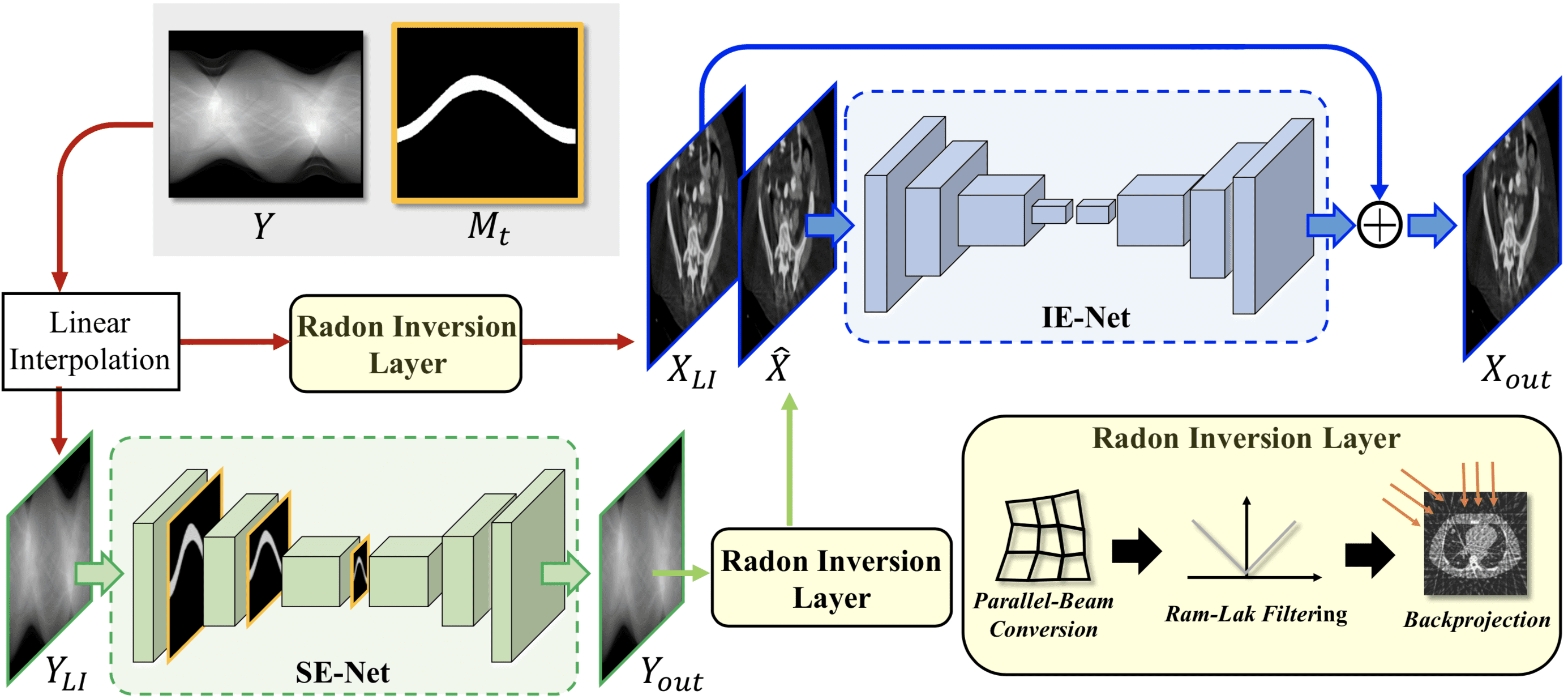
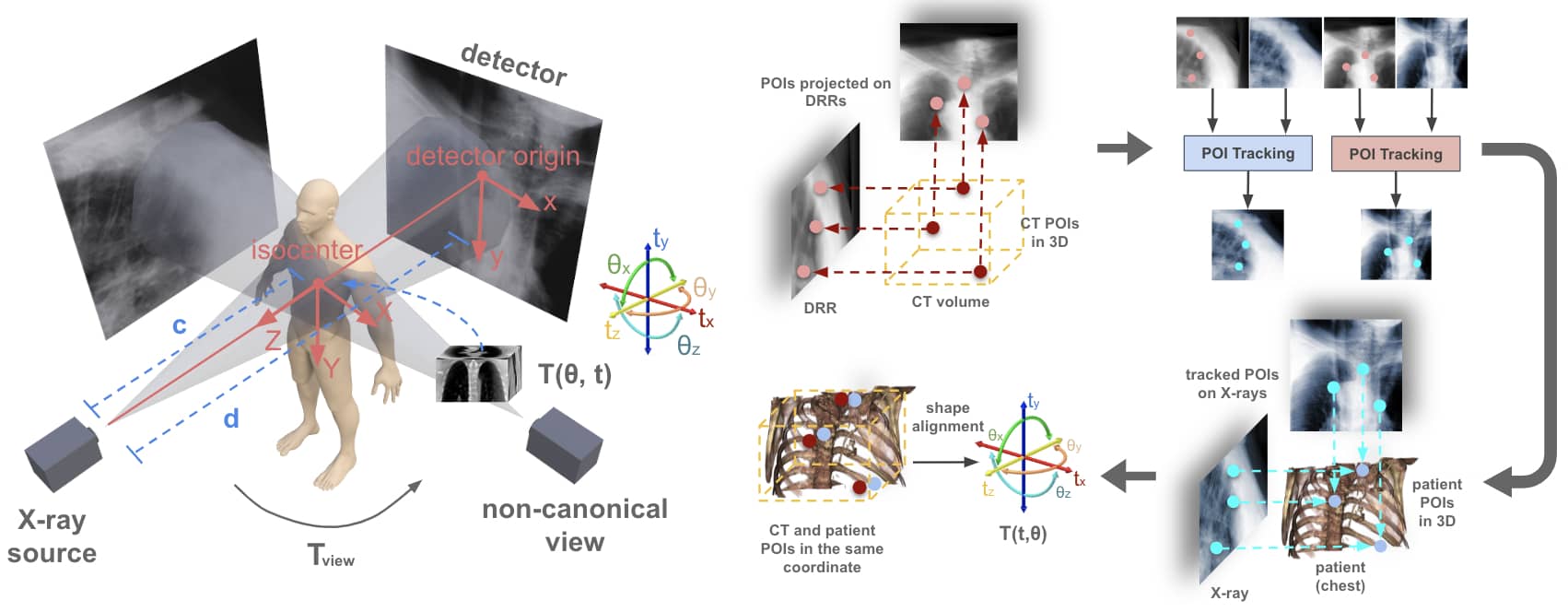
2D/3D Registration for Image-Guided Interventions
Developed a Point-of-Interest network that aligns pre-operative 3D CT volumes with intra-operative 2D X-ray images for surgical guidance. The model tracks anatomical points across multiple views and triangulates them to recover the 3D pose in real time.
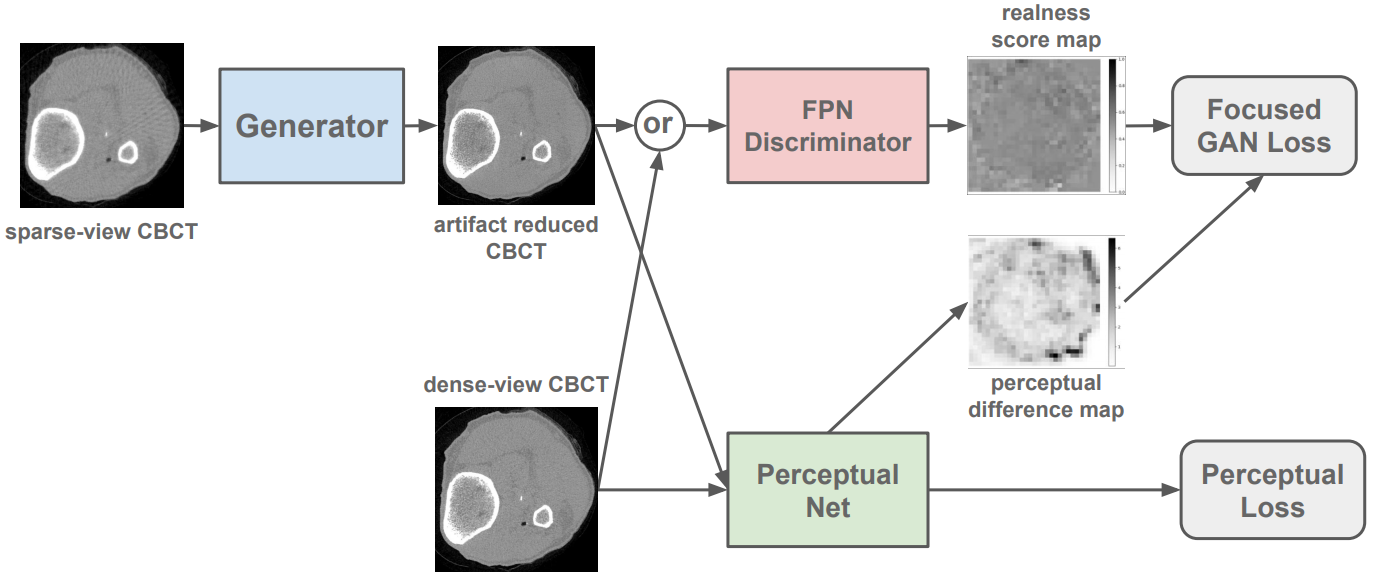
Sparse-View Artifact Reduction
Built an adversarial deep network that reconstructs high-quality cone-beam CT from sparsely sampled projections. This cuts radiation dose and scan time while suppressing the streak artifacts that under-sampling introduces.
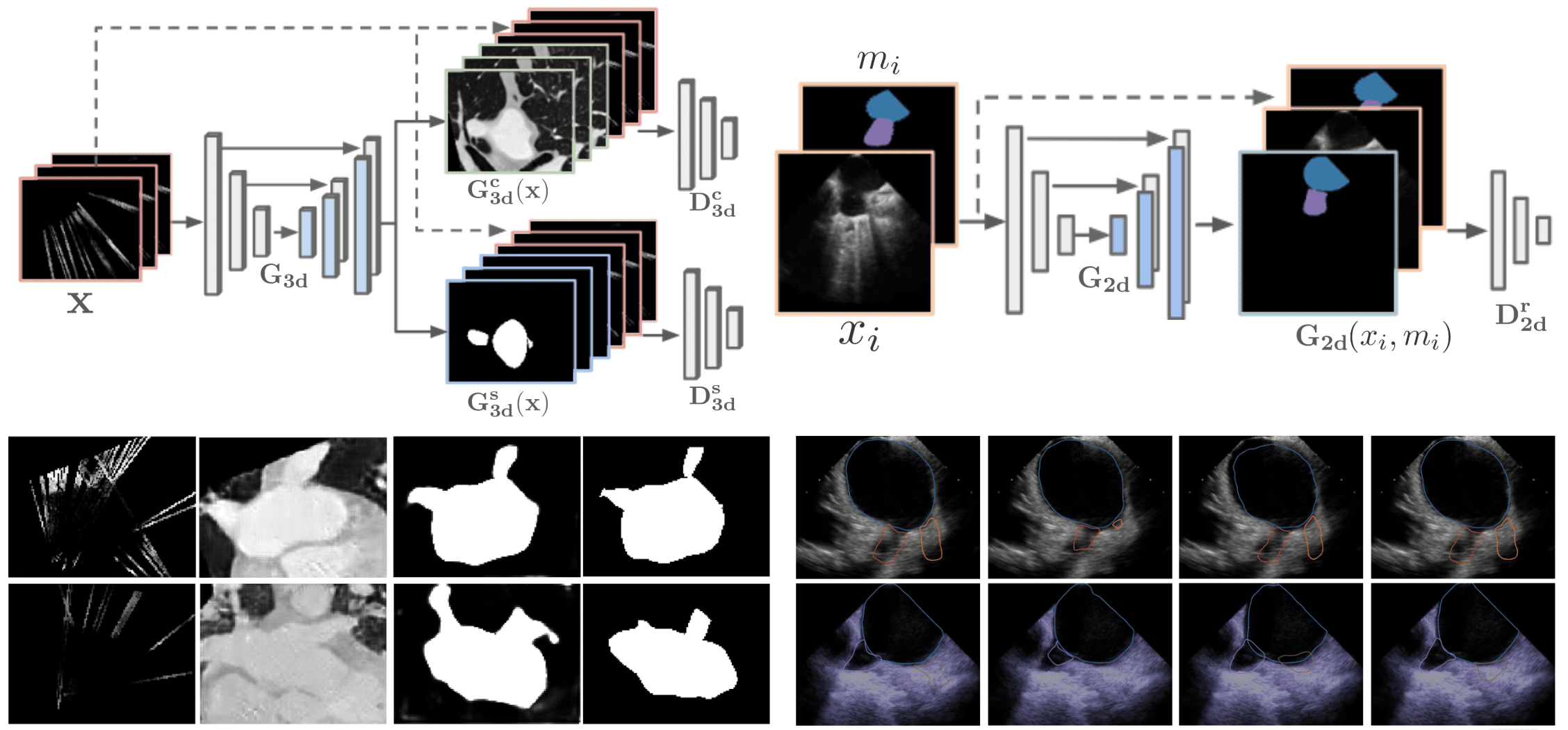
Intracardiac Echocardiography Contouring
Developed deep models for delineating cardiac structures in intracardiac echocardiography. By completing missing 3D context across modalities and combining 3D and 2D segmentation, the approach produces accurate contours from limited ultrasound views.
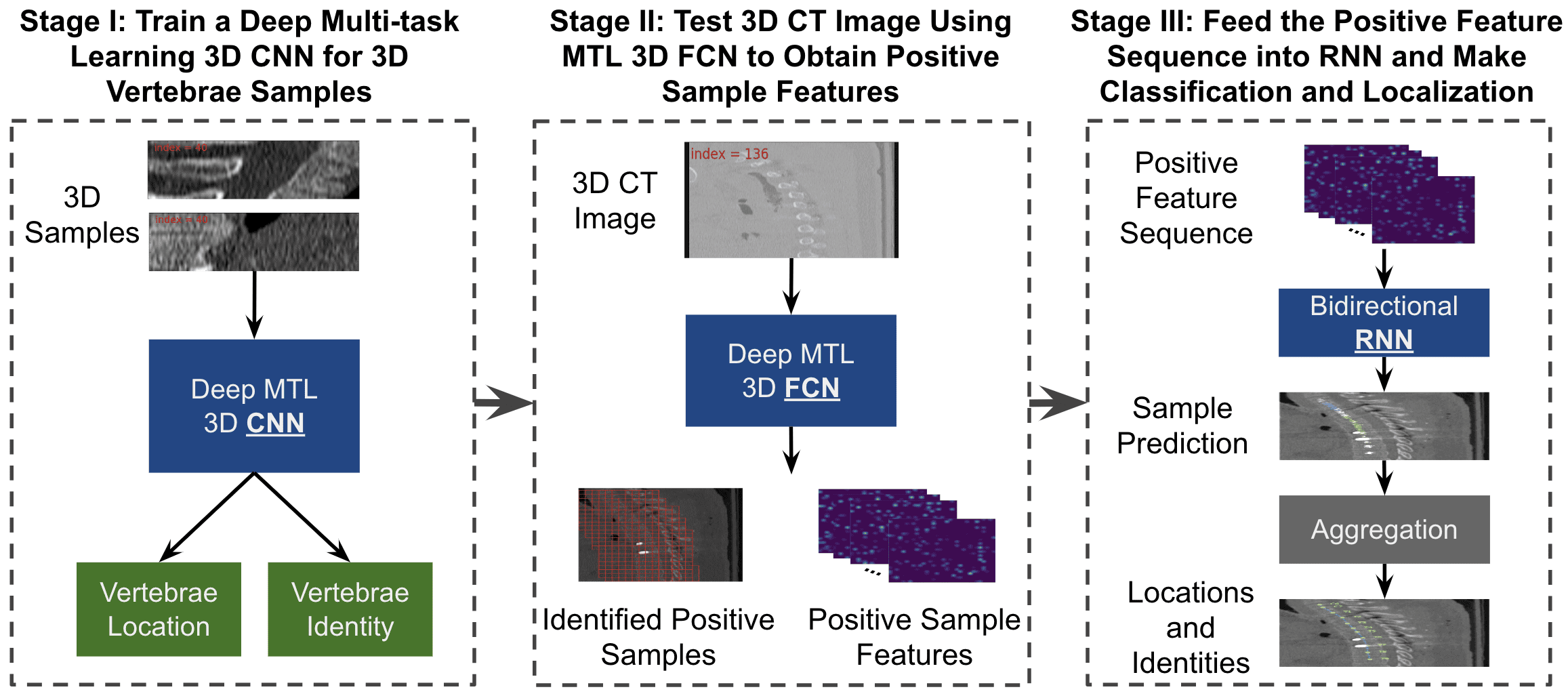
Abnormal Vertebra Detection During Surgery
Created a method to identify and localize individual vertebrae in spinal CT by jointly modeling short- and long-range context along the spine. This enables robust vertebra labeling even when only part of the spine is visible during surgery.
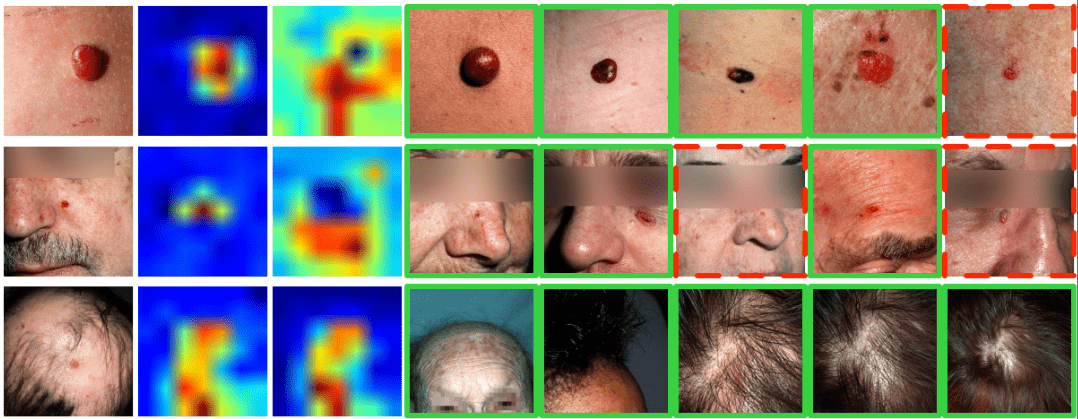
Deep Learning for Skin Disease Diagnosis
Developed multi-label and multi-task deep networks that classify skin diseases and characterize lesions from clinical images. The approach moves beyond single-label diagnosis toward richer, more clinically meaningful assessment of skin conditions.